
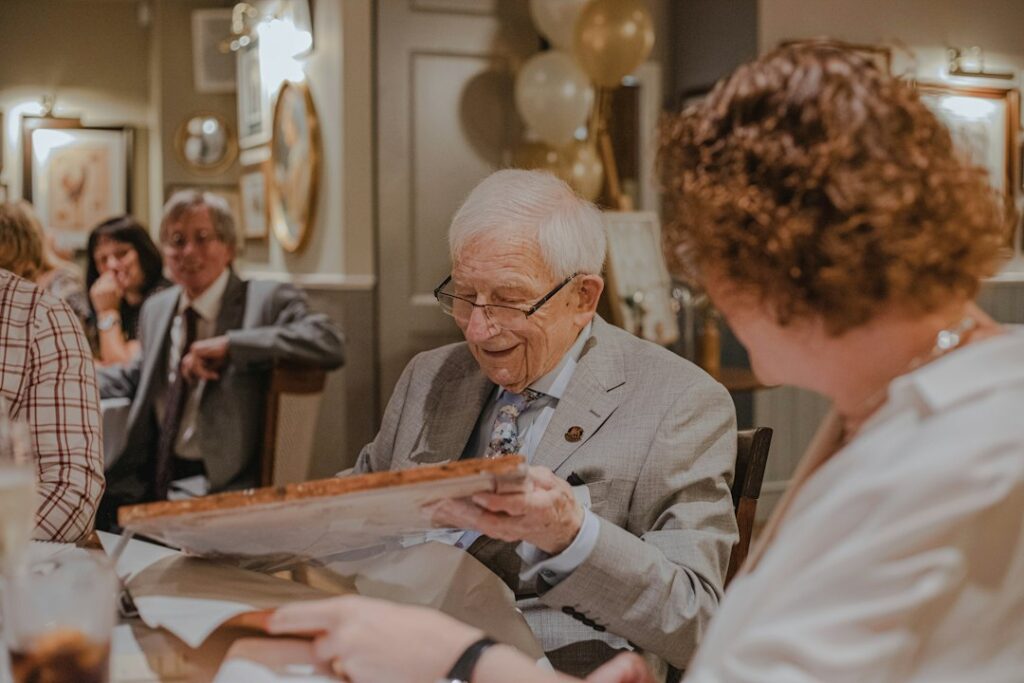
Creative activity remains meaningful throughout later life. In assisted living, art, music, writing, gardening, cooking, and hands-on projects can support personal expression, social connection, memory, confidence, and daily enjoyment. These activities are not only ways to pass time; they can help residents maintain a sense of identity and choice.
Why does creativity matter for older adults?
Creative engagement gives residents opportunities to make decisions, express feelings, and use skills developed over many years. A person does not need formal artistic training to benefit from creating something.
Drawing, singing, arranging flowers, decorating cookies, telling stories, or working with fabric may help residents:
- Express emotions that are difficult to explain in conversation
- Continue familiar hobbies and personal traditions
- Practice hand coordination and attention
- Share memories and life experiences
- Build friendships through group activities
- Experience accomplishment and independence
- Add variety to the daily routine
Creativity also allows residents to be recognized for who they are beyond their age, diagnosis, or care needs. A former gardener may still have strong opinions about planting arrangements. Someone who enjoyed woodworking may appreciate sanding, assembling, or discussing tools even if physical limitations prevent larger projects.
What types of creative activities work well in assisted living?
The most useful activities are flexible, familiar, and adaptable. Projects should allow residents to participate at different skill levels without making anyone feel judged.
Common options include:
- Watercolor painting, sketching, collage, or simple printmaking
- Knitting, crocheting, quilting, embroidery, or large-piece sewing
- Seasonal decorating using paper, fabric, leaves, or other safe materials
- Music listening, sing-alongs, rhythm instruments, or reminiscing through songs
- Poetry, journaling, letter writing, and guided storytelling
- Cooking demonstrations, recipe sharing, or assembling no-bake foods
- Container gardening, seed starting, flower arranging, and nature crafts
- Photography, oral-history projects, and displays of residents’ memories
- Building with large connecting pieces, puzzles, or simple woodworking materials
- Drama, reading aloud, puppetry, or short group performances
Activities do not need to produce a polished final product. The process of choosing colors, handling materials, recalling a recipe, or contributing an idea may be more valuable than the finished item.
How can activities be adapted for different abilities?
A creative program should offer more than one way to participate. Residents with arthritis, limited vision, hearing loss, memory changes, or reduced endurance may need modified tools and shorter sessions.
Helpful adjustments include:
- Using large-handled brushes, pens, scissors, and utensils
- Choosing high-contrast materials for residents with low vision
- Providing pre-cut shapes, partially prepared kits, or simplified instructions
- Offering picture-based directions instead of relying only on written steps
- Playing music at a comfortable volume and reducing background noise
- Scheduling rest breaks and allowing residents to leave or pause without embarrassment
- Placing materials within easy reach and keeping pathways clear
- Offering seated and standing options when appropriate
- Demonstrating one step at a time rather than explaining an entire project at once
Residents living with dementia may participate successfully when activities connect with earlier interests. Someone who once cared for a household may enjoy folding fabric, sorting buttons by color, arranging napkins, or discussing family recipes. The activity should emphasize comfort and engagement rather than accuracy.
Should residents be encouraged to try unfamiliar activities?
Yes, but encouragement should not become pressure. A resident who does not want to paint may prefer music, conversation, gardening, or helping organize supplies.
A respectful approach is to offer choices:
- “Would you rather work with flowers or listen to music?”
- “Would you like to do the whole project or help with one part?”
- “Would you prefer to work alone or with a small group?”
Trying something new can be rewarding, but familiar activities are equally valuable. Repeating a favorite song, recipe, craft, or seasonal tradition can provide comfort and strengthen a resident’s connection to personal history.
How can families support creativity during visits?
Families can bring conversation and materials into visits without turning them into lessons. A family member might ask a resident to describe a favorite craft, identify familiar songs, share a recipe, or look through photographs together.
Useful questions include:

- What creative activities did you enjoy earlier in life?
- What kinds of music did you listen to at home?
- Did you have a favorite holiday tradition?
- What colors, flowers, fabrics, or foods do you like?
- Is there a project you would enjoy showing someone else?
Simple shared activities may include decorating greeting cards, assembling a photo album, sorting family pictures, folding origami, arranging flowers, or recording memories about relatives and past events.
Materials should be selected with the resident’s abilities and the setting’s safety rules in mind. Small pieces, sharp tools, hot surfaces, strong adhesives, and allergy-related materials may require supervision or alternatives.
What does local context add to creative programming?
Seasonal changes can provide natural inspiration for activities. In Columbia, PA, residents may enjoy projects connected to river views, changing leaves, winter weather, spring planting, summer gardens, or autumn harvest traditions. Indoor activities can be especially useful during periods of rain, cold, heat, or icy walking conditions.
Local memories may also shape meaningful discussions. Residents might recall working in gardens, attending community events, preparing family meals, traveling along nearby roads, or watching seasonal changes around the Susquehanna River. These conversations can become prompts for painting, writing, photography, music, or storytelling.
The goal is not to create a display about the community. The goal is to help residents connect creative activity with places, routines, and experiences that have mattered in their lives.
How can assisted living staff make creativity part of daily life?
Creative opportunities are more effective when they are not limited to a single scheduled class. Small choices can be built into ordinary routines.
For example, residents might select table decorations, choose music during an activity, help arrange a display, fold napkins for a gathering, or contribute ideas for a seasonal theme. A resident who cannot complete a project independently may still choose materials, give directions, or evaluate the result.
Staff can also learn from residents by documenting preferences such as:
- Favorite music and familiar songs
- Former hobbies and occupations
- Preferred colors, textures, and scents
- Comfort with groups or individual activities
- Cultural, religious, and family traditions
- Activities that cause frustration or fatigue
This information helps prevent a common mistake: assuming that every older adult enjoys the same crafts. Creativity is personal. A quiet resident may prefer writing, while another may thrive during a lively music group.
How should success be measured?
Success should be measured by participation, comfort, choice, and connection—not artistic quality. A resident may benefit from watching a demonstration, holding a tool, listening to a song, sharing an opinion, or talking about a finished project.
Signs that an activity is working may include:
- The resident returns to the activity voluntarily
- Conversation continues during or after the project
- The resident appears relaxed, focused, or pleased
- Personal memories or preferences emerge
- Residents begin helping or encouraging one another
- The activity becomes part of a familiar routine
Creativity in assisted living is most meaningful when residents remain in control of their involvement. The best programs make room for skill, memory, imagination, and personal choice at every ability level.
